Knee Support That Doesn't Slip Down: How to Fix It
Genusto · August 24, 2026
Most people blame the sleeve when it ends up bunched around their calf halfway through a walk. More often than not the sleeve itself is fine — it is the size, the placement or the state of the silicone that has let you down. Here is how to work out which one it is, and what to check before you spend money on a replacement.
Why a knee support that doesn't slip down is mostly about fit
A knee support that doesn't slip down is not a special category of product. It is simply a support that matches the shape of your leg. Your thigh is a cone rather than a cylinder, and every time you bend and straighten, the muscle above the knee changes shape underneath the fabric.
That is the whole mechanism behind slipping. Gravity does very little on its own — it is the repeated bulge of the thigh and the pull of the calf that walks a sleeve southwards over a few hundred steps. So the fix is nearly always about grip and geometry, not about pulling something tighter.
It also explains why the same sleeve behaves completely differently on two people. Someone with heavier thighs and slimmer calves gives the fabric a steeper cone to cling to, and usually needs more anchoring than a size chart on its own will suggest.
How to measure your leg properly before you buy
Most brands ask for a circumference measurement taken roughly a hand's width above the middle of the kneecap, with the leg straight and the muscle relaxed. Stand up to do it rather than sitting, keep the tape snug but not biting into the skin, and measure both legs — they are rarely identical.
If you land between two sizes, think about which problem you would rather have. Sizing down usually improves grip but can pinch behind the knee when you bend deeply. Sizing up is more comfortable for long wear but gives the fabric less to hold on to.
Legs also change through the day, particularly if you are on your feet or it is warm. Taking a measurement in the morning and another in the evening gives you a range to work with rather than a single optimistic number.
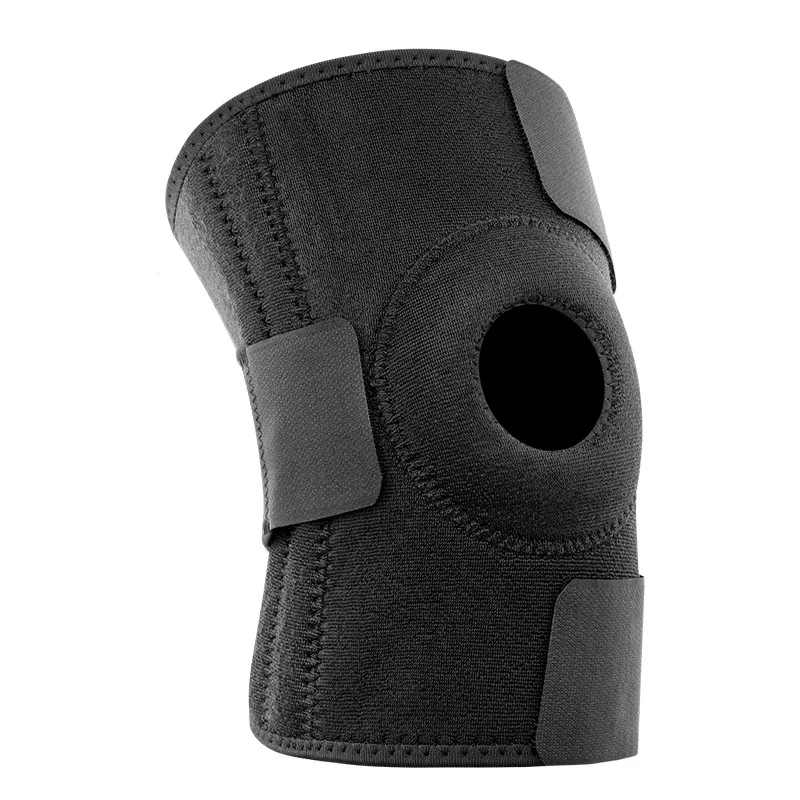 Genusto FlexGuard Knee Support
Silicone, straps and side stays: what actually holds a support in place
Silicone gripper bands are the most common answer. They only work properly against skin, so wearing a sleeve over leggings or trousers removes most of the effect. Wider or wave-patterned grippers tend to spread pressure better than a thin single band, which can dig in and still slide.
Adjustable straps above and below the knee spread the anchoring across two points instead of one. Their real advantage is that you can reset the tension mid-walk without taking anything off, which matters on a long day.
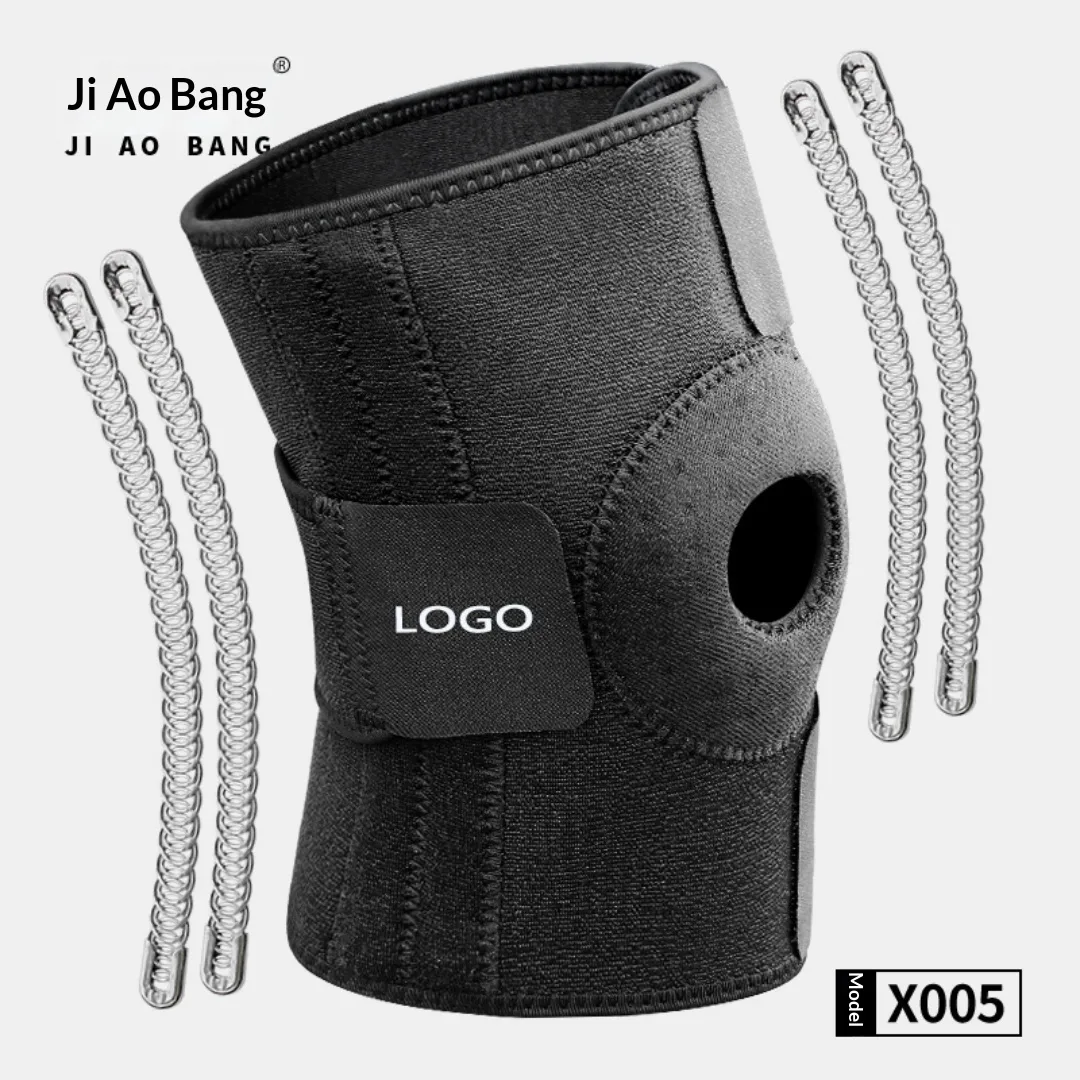
Side stays are the quiet hero here. Flexible stays running down each side stop the sleeve twisting on the leg and folding into a sausage behind the knee — and that folding is one of the biggest causes of migration. A support that stays square to the joint has far less reason to travel.
Common mistakes that make a support migrate
Body lotion, sun cream and freshly shaved skin all reduce silicone grip dramatically. If you moisturise your legs in the morning, put the support on before the cream rather than after, or leave the strip of skin under the gripper alone.
Positioning is the next culprit. A support sitting too high has almost nothing to grip and is pushed down on the first deep bend. The kneecap opening, if there is one, should sit around the kneecap when the leg is straight, not above it.
Finally, elastane wears out. If a sleeve goes on easily now but was a real effort a year ago, it has stretched and no amount of adjusting will bring it back. Rotating two supports rather than flogging one tends to stretch the useful life of both.
Washing and care that protects the grip
Sweat is salty and salt is hard on elastic fibres, so rinsing a support after heavy use does more good than a monthly deep clean. Cool hand wash with a mild detergent is the safest default unless the label says otherwise.
Skip the fabric softener entirely. It leaves a film that coats silicone grippers and turns them slippery, which is precisely the problem you are trying to solve. Air dry away from radiators and never tumble dry, as heat is what kills stretch fastest.
Store it flat or loosely rolled rather than screwed up in the bottom of a bag. Permanent creases in the fabric become permanent folds on the leg.
When slipping is not the real problem
If you find yourself wanting to clamp a support on painfully tight just to feel steady, the tightness is not the issue you are actually trying to solve. Compression can make a knee feel more secure and more aware of where it is, but it is not a structural fix.
Swelling that keeps coming back, a knee that locks or gives way, or pain that wakes you at night are all worth a conversation with a GP or a physiotherapist. They can also tell you whether a support is a sensible thing to be wearing in your particular case, and for how long.
Treat a support as one tool among several — alongside sensible footwear, gradual loading and a bit of strength work — rather than the whole answer.
Frequently Asked Questions
Why does my knee sleeve keep rolling down?
Usually because it is anchoring on skin that is too slippery, sitting too high on the leg, or is a size too large for your thigh. Deep bending also pushes fabric downwards, so a sleeve without side stays tends to fold behind the knee and then travel.
How tight should a knee support be?
Snug enough that it does not move when you walk, loose enough that you can slide a finger under the top edge and feel no pins and needles. If your skin is marked, cold or tingling after twenty minutes, it is too tight.
Can I wear a knee support over leggings or trousers?
You can, but silicone grippers need skin contact to do their job, so expect more slipping. If you must wear it over fabric, choose a design with adjustable straps or side stays rather than relying on grippers alone.
Do knee supports stretch out over time?
Yes. Elastane loses recovery with washing, heat and heavy sweat, so a support that felt firm when new will gradually feel loose. Rotating two and drying them away from radiators slows it down noticeably.
If your current sleeve keeps ending up round your calf, the shape may simply be wrong for your leg rather than the size. The Genusto FlexGuard Knee Support was designed around that problem — four side stays so it cannot twist or fold behind the knee, a breathable knit that does not turn into a sauna, and a pull-on fit that takes about five seconds. It is one practical option among many, so take a look if slipping is your sticking point.
A slip-on knee sleeve with four flexible side stays and a breathable stretch knit. Snug where you want it, quiet under joggers, ready for the gym, the trail or the 5-a-side pitch.
£33.99£16.99
✓ 30 Days to Change Your Mind
You might also like